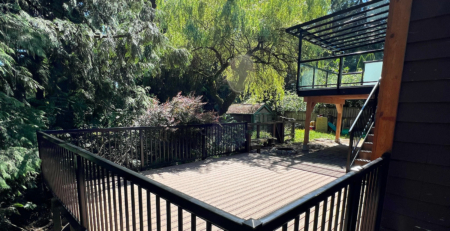
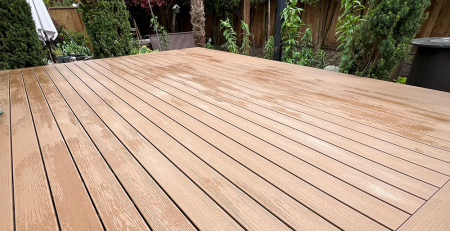
Can You Put Composite Decking on an Old Wood Deck?
 Homeowners often ask me if they can pull off worn wood boards and install composite decking over the existing frame. Sometimes the answer is yes, but only when the structure underneath is sound, properly laid out and compatible with the new decking.
The finished boards are the part everyone sees. The real decision gets made underneath them. Joists, beams, posts, footings, hardware, stairs and the connection to the home all need a proper look before it makes sense to invest in a new surface. If you are still deciding on materials, see why I recommend Trex decking for West Coast decks, or explore our deck building services.
Quick answer: You can resurface an old wood deck with composite when the existing structure is solid, dry, properly supported and compatible with the decking manufacturer’s installation requirements. If the frame has widespread rot, movement, poor drainage or an unsuitable layout, rebuilding is usually the better long-term choice.
Resurfacing Is More Than Replacing Boards
 Deck resurfacing usually means removing the deck boards and railings while keeping some or all of the supporting structure, then installing new decking, fascia and railings over the approved frame.
That can be a smart move when an older wood surface is splintered, faded or a hassle to maintain, but the structure underneath still has plenty of life left. Trex describes resurfacing in similar terms: the walking surface and railings can be replaced when the foundation and framing system are sound. If you are weighing the two materials, read Why Choose Composite Decking Over Wood?
What I don’t recommend is treating resurfacing like a simple board-for-board swap. The old surface needs to come off so the full structure can be seen and assessed. What’s hidden below the boards matters far more than the colour you pick for the finished deck.
When the Existing Deck Frame May Be Reusable
 An existing frame may be a good candidate when:
- The deck feels solid, without noticeable bounce, sway or sagging
- Joists and beams are generally straight and structurally sound
- Posts and footings are stable
- The connection points and hardware are in good condition
- There’s no widespread rot or prolonged moisture damage
- Water can drain and air can move around the framing
- The joist layout suits the selected composite product and board direction
- The planned stairs, borders and railings can be properly supported
Even a promising frame may need selective work. A damaged joist might get replaced, extra blocking might get added, or a few local areas might need correcting so the new surface sits flat and feels solid.
The goal isn’t to save every old component. It’s to keep only the parts that genuinely support a lasting finished deck. For a closer look at how a strong structure comes together, read Building a Deck That Lasts: It Starts With the Basics.
Warning Signs That Point Toward a Rebuild
 Sometimes the visible deck boards are only the beginning of the problem. Once they come off, the frame may show that resurfacing would be money spent on a structure near the end of its useful life.
Warning signs include:
- Rot affecting several joists, beams or posts
- Soft wood around fasteners or connections
- Corroded or pulling hardware
- A deck that sags, leans, moves or feels unstable
- Poorly supported stairs or railings
- Water trapped against the house or on top of framing
- Inconsistent joist heights that would create a wavy finished surface
- Framing that can’t support the desired board layout or added features
- Multiple past repairs that have left an uneven structure
If several of these show up, continuing to patch the frame can cost more time and money without giving you the result you’re after. A rebuild lets us correct the layout, structure, drainage and details together. Not sure what to look for? Here are 7 signs your old deck is not safe anymore.
Five Things I Check Before Recommending Resurfacing
1. The condition of the framing
I look closely at the joists, beams, rim boards, posts and other structural components. Dark staining alone doesn’t tell the whole story. I’m looking for softness, cracking, distortion, decay and areas that have stayed wet.
2. Connections and hardware
Joist hangers, fasteners, post connections and the way the deck meets the home all deserve attention. In our wet Lower Mainland climate, metal hardware and the wood around it can deteriorate even when the top of the deck looks fine.
3. Joist spacing and board direction
Composite products have specific support requirements. Trex advises checking joist spacing and the overall condition of the frame before resurfacing, and its general guidance notes that standard installations often need closer support than some older wood decks, with even closer spacing for diagonal board patterns.
The manufacturer’s current instructions should guide the layout. If the joists are too far apart, additional framing may be needed to give the new surface the support it requires.
4. Flatness and layout
Composite boards follow the surface below them. Joists that rise, dip or twist can show through as an uneven deck, so the framing may need correcting before new boards go on.
Layout matters too. Picture-frame borders, breaker boards, stairs and railing posts all need support in the right places. Adding those details after the boards arrive is backwards; they should be planned while the frame is exposed.
5. Water management
New composite boards resist moisture differently than wood, but they don’t repair wet framing underneath. I look at where rain travels, where debris collects and whether the structure has enough chance to dry. Learn more in What Causes Deck Rot on Newer Decks and How to Prevent It.
This connects directly to how I approach every deck: protect the structure people won’t see, not just the surface they will.
Resurfacing Compared With Rebuilding
| Resurfacing may make sense when… | Rebuilding may make more sense when… |
|---|---|
| The frame is sound and stable | Rot or movement affects several areas |
| The current size and layout still work | The layout no longer suits the family |
| Only limited framing repairs are needed | Much of the frame needs replacement or correction |
| Joist spacing can support the new surface | The framing layout conflicts with the chosen decking |
| Drainage and airflow are working | Moisture is repeatedly trapped in the structure |
| The homeowner wants a surface and railing update | The project includes major changes to stairs, shape or features |
The best answer comes from looking at the whole deck. Age alone doesn’t decide it. Some older frames were built well and remain solid; some newer decks develop problems early because water wasn’t managed properly.
Can Composite Boards Go Directly Over Old Wood Boards?
I wouldn’t install composite boards on top of existing deck boards. Covering the old surface hides its condition, changes the finished height and can trap moisture and debris between layers.
The old boards should come off so the structure can be inspected and prepared. That also gives us access to correct framing, add support where needed, plan borders and protect vulnerable areas before the new surface goes down. To see a finished transformation, read From Concrete Patio to Composite Deck.
Frequently Asked Questions About Deck Resurfacing
1. Is resurfacing cheaper than rebuilding a deck?
It can be, when most of the existing structure is worth keeping. The savings shrink as framing repairs, added joists, stair changes and structural corrections add up. The right comparison is the complete scope, not just the cost of the surface boards.
2. How do I know if the frame under my deck is still good?
The deck needs to be assessed as a full system. Movement, sagging, soft wood, damaged connections and moisture trapped around beams or joists are all warning signs. Removing the old surface gives the clearest view.
3. Can composite decking be installed on joists built for wood boards?
Sometimes. Joist spacing, flatness, board direction and the manufacturer’s requirements all need to line up. Additional joists or blocking may be needed.
4. Can I keep my existing deck railings?
Possibly, if they’re secure, in good condition and fit the finished design. Many resurfacing projects replace the railings at the same time, since the posts and connections are easier to address while the surface is open.
5. Will composite decking stop the frame from rotting?
No. Composite decking gives you a durable, low-maintenance surface, but the wood structure below still needs proper drainage, airflow and protection from water.
6. Is an older deck automatically too old to resurface?
No. The age of a deck is only one part of the story. I’ve seen older structures that were built carefully and still have plenty of life left, and newer decks with early moisture problems. I’d rather look at the actual condition of the framing, connections and supports than decide from age alone.
Start With What Is Under the Surface
Resurfacing can give an older deck a completely new look while making good use of a solid existing structure. But it only makes sense when the frame below deserves the new material going on top.
If you’re considering replacing old wood boards with composite in Pitt Meadows, Maple Ridge, Coquitlam, Port Coquitlam, Port Moody or elsewhere in the Lower Mainland, contact Made by Mike Construction. I can assess the deck, explain what’s worth keeping and help you compare resurfacing with rebuilding. You can also browse our completed deck projects for ideas.
Read More: Tips to Keep Your Composite Deck Looking New All Winter Long