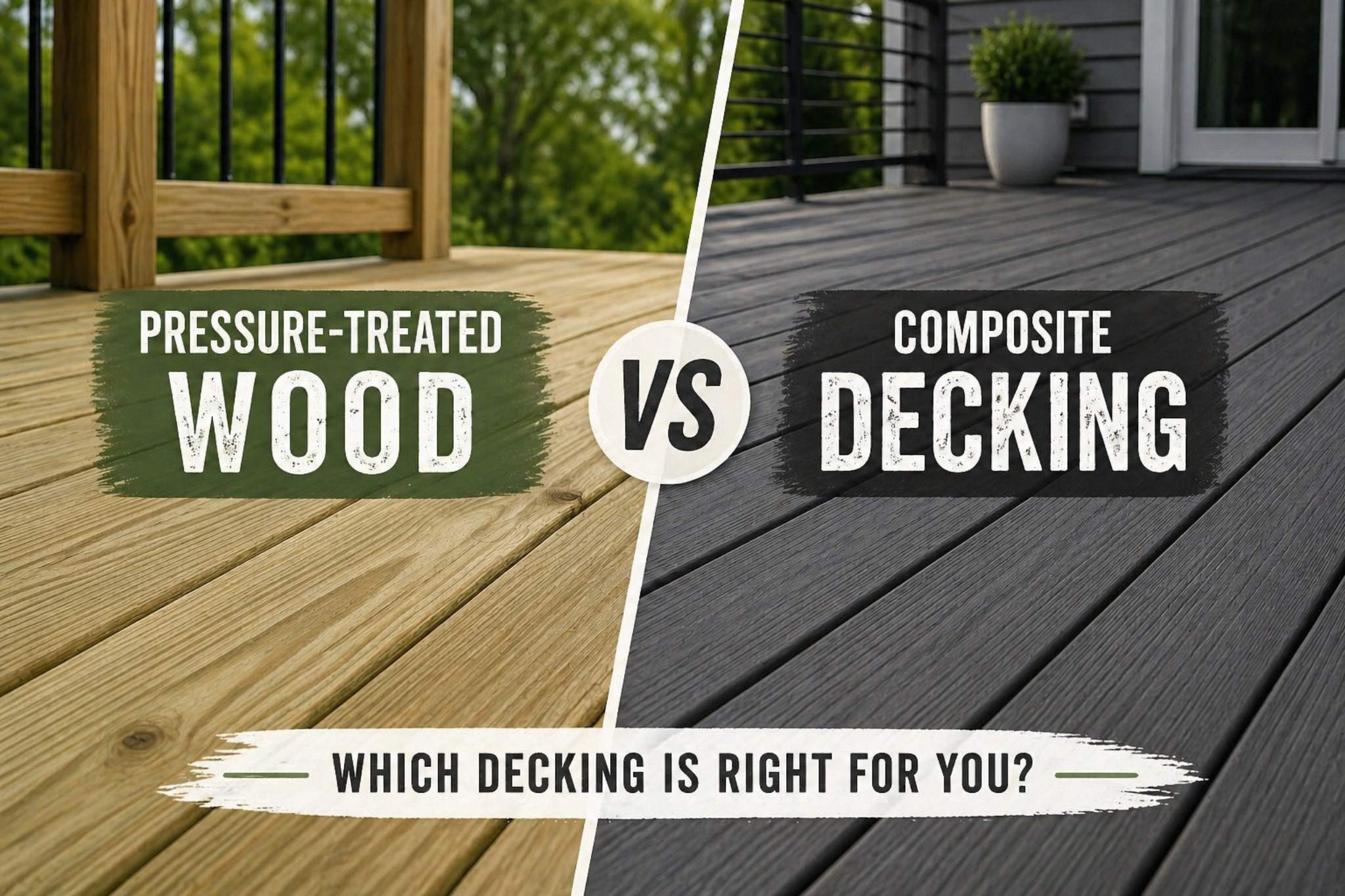
Pressure Treated vs. Trex: Is the Upgrade Worth It?
It’s one of the most common questions I get, and it’s a fair one. When you’re looking at a quote and see a gap of several thousand dollars between pressure-treated wood and even the entry-level Trex line, it makes sense to stop and think. That’s real money — and you want to make the right call for your home and your budget.
Here’s the honest answer: it depends on what you value. Both options can work well, but they deliver very different experiences over time. And in our West Coast climate, that difference matters more than most people realize.
What You’re Really Getting with Pressure Treated
Pressure-treated is still a solid choice — especially when budget is the first priority. It gets you into a functional outdoor space at a lower upfront cost, and when it’s built right, it does the job. For a lot of homeowners, that initial saving makes the decision feel simple.
But the full picture is a bit more complicated. Wood needs ongoing attention to stay looking good. Regular cleaning, staining, and sealing — it adds up, both in time and money. In a place like Coquitlam, where rain and moisture are part of the deal for most of the year, skipping that maintenance isn’t really an option. Without it, you’re looking at cracking, warping, and a deck that ages faster than you’d expect.
I’ve seen it play out plenty of times. Homeowners start with pressure-treated, and a few years in, they’re either putting consistent effort into upkeep or starting to think about resurfacing sooner than they planned. It’s not a bad option — it just comes with ongoing responsibility that not everyone wants.
Read More: The Made By Mike Approach: Building More Than Just Structures
Where Composite Starts to Pull Ahead
Even at the entry level, Trex and other composite products offer something wood simply can’t: consistency. The material is built to handle moisture, wear, and daily use without needing constant attention. No splintering, no warping, and far less sensitivity to the wet-dry cycles we deal with here.
Over time, composite tends to hold its look much better — and that’s something homeowners really notice once the
deck has been through a few seasons. The lowest Trex line won’t have all the finishes or textures of the premium products, but it still carries that low-maintenance promise. For a lot of people, that alone is worth the extra upfront cost. Especially if the goal is to spend summers on the deck, not working on it.
Read More: Why Made by Mike Construction Recommends Trex Decking for West Coast Decks
So Which One Is Worth It?
If I’m being straight with you, it comes down to how you want to spend your time and how long you plan to stay in the home.
Pressure-treated can absolutely get the job done if keeping costs down right now is the priority. But if you’re thinking longer term — and you’d rather not spend your weekends staining boards or worrying about moisture damage — composite starts to make a lot more sense.
There’s no universal right answer here. What I try to do is walk homeowners through both options honestly, in the context of their home and how they actually use their outdoor space. The best choice is the one you’ll still feel good about five years from now.
If you’re comparing quotes or weighing your options, it’s worth having that conversation before you decide. A little clarity upfront can save a lot of second-guessing down the road.