What is the Best Deck Cover for BC Rain: Pergola, Awning or Roof?
 In the Lower Mainland, a deck cover isn’t only about shade. It can decide how many months of the year you use the space.
Homeowners ask me whether they should choose a pergola, an awning, a glass or acrylic cover, an aluminum cover, or a more traditional solid roof. The right answer depends on what you want protection from, how much daylight you want to keep, whether you prefer a fixed or flexible structure, and how the cover will connect with the home. Our deck building services include custom covers designed around the way you use your outdoor space.
Quick answer: Choose a pergola for open-air style and partial shade, an awning for flexible coverage, a glass or acrylic cover for rain protection with daylight, aluminum for low-maintenance shelter, or a solid framed roof for the most permanent room-like result.
Deck Cover Options at a Glance
| Option | Best for | Rain protection | Daylight | Key consideration |
|---|---|---|---|---|
| Pergola | Open-air design and partial shade | Limited unless a roof system is added | High | A classic open pergola is not a waterproof roof |
| Retractable awning | Flexible shade | Product-dependent | High when retracted | Wind limits, projection and seasonal care |
| Fixed glass or acrylic cover | Rain protection without making the space feel dark | Strong when properly designed | High | Drainage, cleaning and glare |
| Aluminum cover | Durable, low-maintenance shelter | Strong | Varies by panel type | Appearance, rain sound and light below |
| Framed solid roof | A permanent, integrated outdoor room | Strong | Lower unless skylights are added | Greater structural complexity |
No option wins every category. The goal is to match the cover to the way you’ll use the deck.
Start With the Weather You Want to Block
Some homeowners mainly want relief from hot afternoon sun. Others want to barbecue in November without standing in the rain. Some need both, but don’t want to darken the kitchen or living room inside the house.
Before choosing a cover, I ask a few practical questions:
- Is the deck exposed to steady rain, wind-driven rain or strong afternoon sun?
- Which direction does it face?
- Do nearby trees drop needles, leaves or sap?
- Will the space be used for dining, lounging, cooking or a hot tub?
- How much natural light enters the home through the doors and windows beside the deck?
- Do you want permanent protection or the option to open the space?
Those answers narrow the choices quickly.
Pergola for an Open Architectural Feel
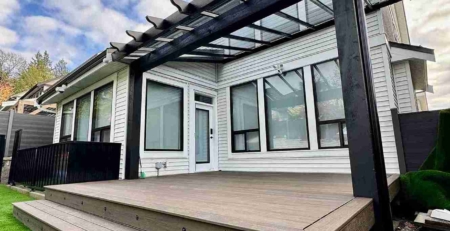
 A pergola defines the outdoor room without fully closing it in. Wood, aluminum and hybrid pergolas can add scale, privacy and a strong visual connection to the house and landscape. If you want to see how pergolas and awnings work together, read How to Add Shade and Style to Your Deck With Awnings and Pergolas.
An open-slat pergola provides partial shade, not dependable rain protection. That’s an important distinction in our climate. If staying dry is the priority, the design needs an integrated roof product, adjustable louvres or another weather-rated covering.
A pergola is a good fit when you want:
- An open-air feeling
- Partial shade and visual structure
- A place for lighting or climbing plants
- A feature that defines dining and lounge zones
It’s less suitable when your main goal is reliable shelter through wet months and the design has no drainage system.
Awning for Flexible Shade
An awning works well when you want coverage only when it’s needed. Retractable models can shade a sunny deck, then open up the view and daylight when conditions change. Fixed awnings offer a simpler, permanent solution.
The exact rain and wind performance depends on the product. Fabric, frame strength, projection, slope and manufacturer limits all matter. An awning should be chosen for the property’s actual exposure, not just its colour and appearance.
An awning is a good fit when you want:
- Flexible shade
- A lighter-looking addition to the home
- Coverage over a focused dining or seating area
- The ability to retract the cover and restore full daylight
Glass or Acrylic Cover for Shelter With Daylight
 Glass and acrylic roof panels can keep rain off the deck while letting daylight through. That makes them especially useful when a solid roof would make the deck, or the room inside the house, feel too dark.
The details matter here. The frame, panel system, slope, flashing and gutters need to move water away properly, and tree debris and visible dirt on clear panels are worth considering at the design stage.
This option is a good fit when you want:
- Strong rain protection
- A bright space below the cover
- A clean, modern appearance
- A fixed structure that feels integrated with the deck
Tinted panels can help manage glare and summer sun while keeping the space bright.
Aluminum Cover for Low-Maintenance Protection
An aluminum cover is durable and skips the finishing schedule that exposed wood needs. Depending on the system, it can provide full rain protection or combine solid and translucent panels to balance shade and light.
I look at how the lines, posts and colour relate to the home. A cover performs best when it looks intentional rather than added as an afterthought.
An aluminum cover is a good fit when you want:
- Low-maintenance materials
- Reliable rain protection
- A modern, tidy appearance
- Options for combining shade and daylight
Solid Framed Roof for a Permanent Outdoor Room
 A framed roof finished with shingles, metal or tongue-and-groove details can make a deck feel like a true extension of the home. It offers dependable shelter and opens up options for lighting, fans and other integrated features when properly designed and installed.
It’s also the most substantial option. Roof loads, foundations, posts, beams, the connection to the house and drainage all need consideration. Because a solid roof blocks more light, skylights or carefully placed open sections may be worth discussing.
A solid roof is a good fit when you want:
- The most room-like outdoor space
- Strong all-season shelter
- A design that matches the home’s architecture
- Integrated ceiling finishes, lighting or other features
Details That Make a Covered Deck Work Better
The cover is only one part of the outdoor room. I also think about:
- Drainage: where will roof water go, and will gutters or downspouts interfere with the space?
- Wind: is the deck exposed, and is the selected system rated for those conditions?
- Light: will the cover darken nearby windows or create glare?
- Heat and cooking: does a barbecue or heater need clearances or ventilation required by its manufacturer?
- Privacy: can screens block a direct view without making the deck feel closed in? Our guide on deck railings and privacy screens covers this in more detail.
- Traffic flow: do posts interfere with stairs, doors, furniture or the path to the yard?
- Future use: could the family later add lighting, a hot tub, a sauna or an outdoor kitchen?
Planning these details together produces a far more comfortable space than choosing a cover on its own.
Read More: How to Turn a Basic Deck Into a Multi-Zone Outdoor Living Space.
Frequently Asked Questions About Deck Covers
1. Is a pergola waterproof?
A traditional open-slat pergola is not waterproof. Some pergola systems add fixed panels or adjustable louvres that provide rain protection, but they need proper slope and drainage.
2. What deck cover lets in the most light?
An open pergola lets in the most light but offers limited rain protection. For both daylight and shelter, glass or acrylic panels are often the strongest option.
3. Is a retractable awning suitable for Lower Mainland rain?
It can be, for shade and some rain, but performance depends on the product and exposure. Always follow the manufacturer’s limits for rain, wind, slope and retraction.
4. Will a solid roof make the house darker?
It can reduce daylight through nearby doors and windows. Roof projection, ceiling colour, orientation and skylights or translucent sections can all help manage that effect.
5. Can a cover be added to an existing deck?
Sometimes, but the existing deck needs to be assessed first. The framing, posts, beams and footings may not have been designed for the added structure, which makes the condition and layout of the existing deck an important part of the design conversation.
6. Which deck cover is easiest to maintain?
Aluminum covers are generally among the lowest-maintenance choices. Glass and acrylic panels are also straightforward to care for, though clear surfaces make dirt and tree debris more visible. Wood structures usually need more ongoing attention. The easiest option for your home depends on the surrounding trees, exposure and finish you choose.
Choose the Cover Around the Way You Live
The best deck cover is the one that gives you the right balance of shelter, daylight, style and maintenance for your property. A pergola keeps the space open. An awning adds flexibility. Glass or acrylic preserves daylight. Aluminum offers low-maintenance coverage. A solid roof creates the most permanent outdoor room.
Made by Mike Construction designs and builds custom decks, patios, pergolas, awnings and roof covers across Maple Ridge, Pitt Meadows, Coquitlam, Port Coquitlam, Port Moody and the Lower Mainland. Browse our completed deck projects for ideas, or contact me to talk through the options for your outdoor space.
Read More: How to Create an Outdoor Space That Brings People Together